
Hands-on Workshop on Smart IoT Ideas and Prototype Development
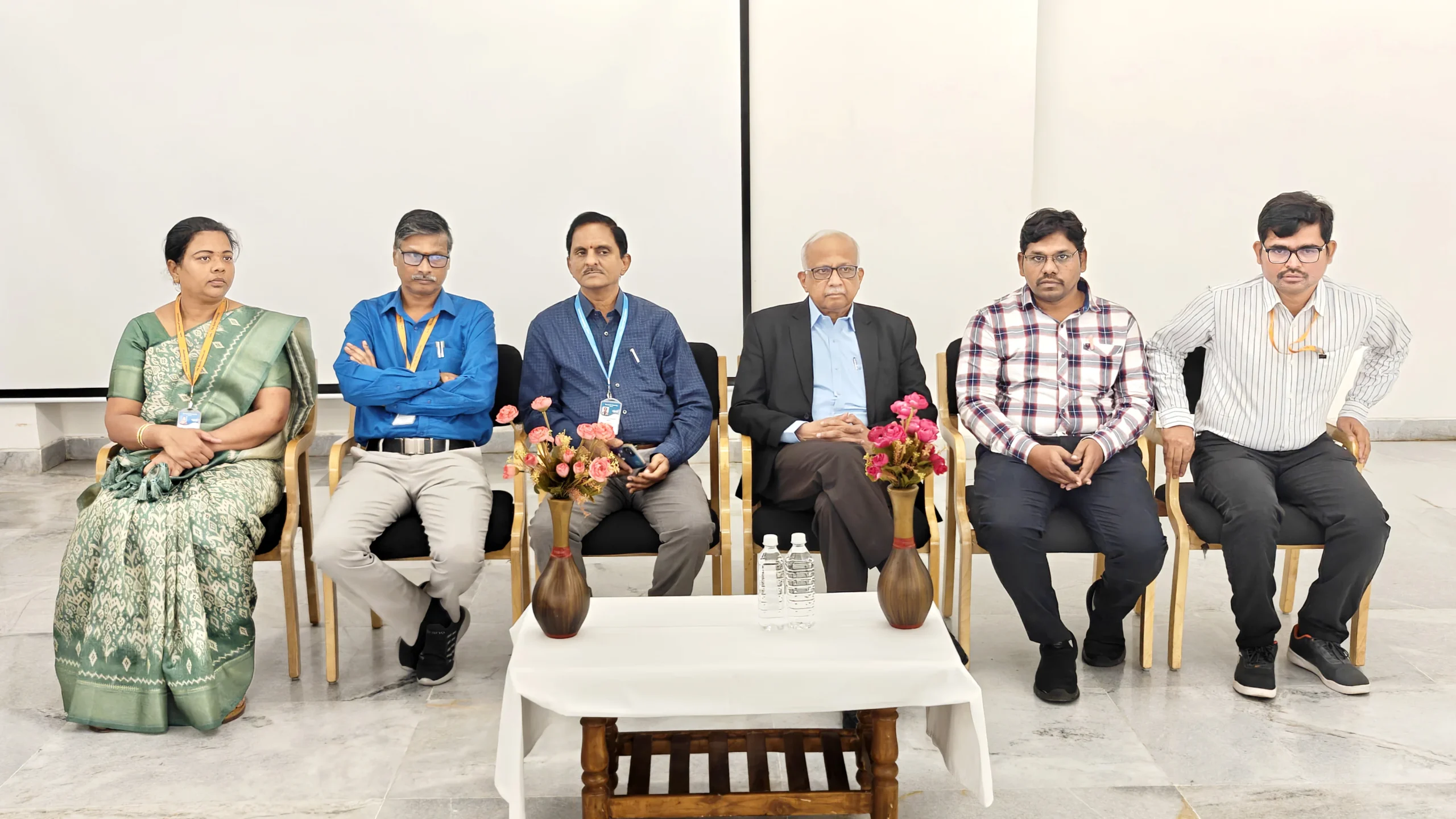
The Department of Computer Science and Engineering, School of Technology in association with the Institution’s Innovation Council (IIC) of The Apollo University, successfully organized a full-day hands-on workshop titled “Smart Idea, Smart Prototypes: Hands-on IoT Development” on 28th January 2026. The programme was conducted as an IIC-driven innovation activity with the objective of promoting experiential learning, innovation mindset, and practical skills among engineering students in the rapidly evolving domain of Internet of Things (IoT) and embedded systems.
The eight-hour offline workshop witnessed enthusiastic participation from 65 students and 9 faculty members, reproducing strong interest in applied technology and prototype-based learning. The workshop was designed to bridge the gap between theoretical knowledge and real-world implementation by enabling participants to conceptualize, design, develop, and test IoT-enabled automation solutions. Emphasis was placed on hands-on learning, problem-solving, and system integration, ensuring that students gained practical exposure to industry-relevant technologies.
The Workshop was formally inaugurated by Dr. H Vinod Bhat, Vice Chancellor, The Apollo University in the presence of the Registrar, Prof. M Potharaju and Dean, SoT, Dr. D Jagadeesan. Vice Chancellor in his address indicated that the session is going to be a highly effective platform for skill enhancement, experiential learning, and innovation promotion to develop incubations and real time prototypes. The programme he acknowledge that has to be a path was for learning design thinking, collaboration, and technical competence among students to the development of industry-ready engineers. Vice Chancellor indicated that such exposure to real-time applications enhanced the interest in research, innovation, and startup-oriented thinking, aligning well with the objectives of the Institution’s Innovation Council.
Dr. P. Suresh, Professor and IP Cell In-charge at SVCE (Autonomous), Tirupati, Andhra Pradesh, served as the Resource Person for the workshop. With his strong academic background and extensive experience in innovation, intellectual property rights, and applied research, Dr. Suresh brought immense practical value to the programme. He is well known for his ability to translate complex technical concepts into simple, hands-on learning experiences, particularly in the areas of IoT, embedded systems, and prototype development. During the workshop, he tirelessly guided students through real-time circuit design, Arduino programming, sensor integration, and system debugging, ensuring that every participant gained meaningful exposure to end-to-end IoT development. His interactive teaching style, constant encouragement, and problem-solving approach inspired students to think creatively, experiment fearlessly, and move confidently from ideas to working prototypes, making his contribution a key highlight of the event.
The technical sessions was focused on Arduino-based embedded system development, where students worked extensively with microcontrollers, sensors, actuators, and interfacing components. Participants were guided through circuit design, sensor integration, Arduino programming, debugging techniques, and real-time testing of automation systems. The workshop adopted a team-based approach, encouraging collaborative learning, peer interaction, and collective troubleshooting, which significantly enhanced the learning experience.
The programme covered three major application themes that are highly relevant to contemporary technological needs, namely Agriculture Automation, Home Automation, and Industrial Automation. Under the agriculture automation domain, students developed sensor-based systems for environmental monitoring and automated irrigation. In the home automation segment, teams worked on IoT-enabled appliance control systems aimed at improving convenience and energy efficiency. The industrial automation theme focused on smart motor control, monitoring systems, and automation solutions suitable for industrial environments. Each team demonstrated commendable technical proficiency, creativity, and teamwork while developing functional prototypes within the stipulated time.
Throughout the workshop, students displayed strong enthusiasm and engagement, effectively translating ideas into working models. Faculty members actively supported the sessions by mentoring teams, clarifying concepts, and facilitating smooth execution of activities. The collaborative involvement of students, faculty, and IIC coordinators ensured the success of the event and the workshop had a significant impact on participants by strengthening their practical understanding of IoT system architecture and embedded programming. Students gained hands-on confidence in working with hardware components, writing and uploading Arduino code, integrating sensors, and developing end-to-end automation solutions. The workshop was rich with its outcome and the leaders congratulated the efforts of IIC and its activities in campus led by Dr. Kasa Sudheer, Associate Professor, SoT and Convener, TAU IIC. The presence of senior faculties, staffs and students added the relevance of the programme and the involvement of the school in leading innovation in its academic offerings.