
AMUN Students Engage in International Mediation at Diplomacy Meet
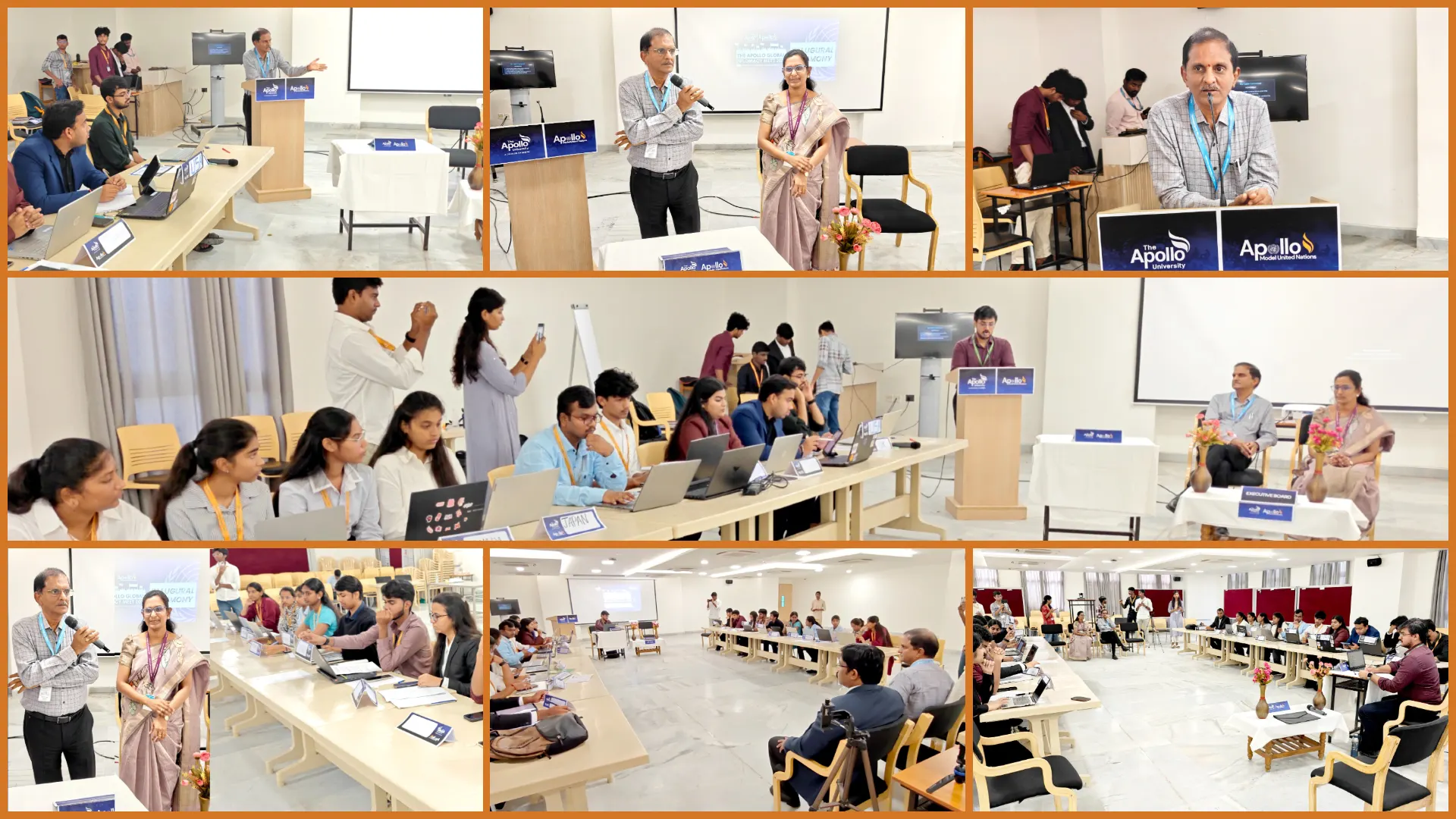
The Apollo University, through its vibrant and intellectually motivated Apollo Model United Nations (AMUN) Club, hosted The Apollo Global Diplomacy Meet 2025 on December 6, 2025, at Dr. PCRKC Auditorium. Organized in observance of Human Rights Day, the event fetched together students representing different delegates, faculty members, guest delegates, and distinguished leaders for an immersive full-day diplomatic simulation dedicated to the global theme: “Addressing the Rights and Protection of Minorities with Special Emphasis on the Current Situation in Sudan.”
The conference commenced at 9:00 AM with a ceremonious welcome to the gathering. Prof. M. Potharaju, Registrar, The Apollo University, graced the event as the Chief Guest, while Dr. Alfred J. Augustine, Dean, Apollo Institute of Medical Sciences and Research, attended as the Guest of Honour. Their presence set an inspiring tone for the deliberations that followed. In the inaugural remarks, Registrar emphasized the role of young diplomats and student leaders in shaping global dialogue, promoting peace, and safeguarding fundamental human rights across geopolitical boundaries.
Throughout the conference, student delegates stepped into the roles of global representatives, engaging in structured committee sessions, moderated debates, moderated caucuses, and policy drafting exercises. The participants demonstrated exemplary research depth and diplomatic finesse as they navigated complex international humanitarian challenges surrounding minority rights, ethnic conflicts, and humanitarian crises. The situation in Sudan, marked by civil unrest, displacement, and targeted violence against vulnerable groups, became the central axis of the discourse. Students analysed root causes, assessed geopolitical dimensions, and proposed multi-layered solutions derived from international law, UN mandates, and regional peacebuilding frameworks.
The discussions were marked by a remarkable display of critical thinking, cultural sensitivity, and evidence-based argumentation. Delegates presented compelling speeches grounded in data from UNHCR, OHCHR, African Union reports, and academic sources. Their articulate policymaking proposals illustrated a deep understanding of conflict resolution, humanitarian diplomacy, socio-political reconstruction, and international cooperation. The debating sessions reflected the essence of the Model United Nations spirit—respectful negotiation, intellectual humility, collaboration, and an unwavering commitment to justice and equity.
Faculty Coordinator Dr. Sudha Paipuru skilfully guided the proceedings and ensured that the academic standards, procedural rigor, and diplomatic etiquette of global MUN conferences were maintained throughout the event. Her encouragement nurtured a development environment where students felt empowered to voice their perspectives on global human rights concerns.
The sessions culminated in the drafting of a comprehensive resolution document, collaboratively authored by the delegates. The resolution outlined actionable recommendations on minority protection mechanisms, improved humanitarian access in Sudan, enhanced peacekeeping interventions, digital documentation for human rights monitoring, and youth-led cross-border advocacy initiatives.
The event enriched participants with profound knowledge of global human rights discourse and strengthened their skills in leadership, negotiation, public speaking, and policy drafting—skills essential for shaping future global citizens and diplomats. Students expressed that the simulation provided them with a transformative learning experience, broadening their worldview and deepening their empathy towards communities affected by conflict and discrimination.
With active engagement, intellectual vibrancy, and a shared commitment to global justice, The Apollo Global Diplomacy Meet 2025 concluded on a successful note. The Apollo Model United Nations Club continues to position itself as a platform that cultivates globally aware, socially responsible, and diplomatically skilled young leaders ready to influence positive change at both national and international levels.