
Hands-on Training Programme on Artificial Intelligence and Generative AI (ChatGPT)
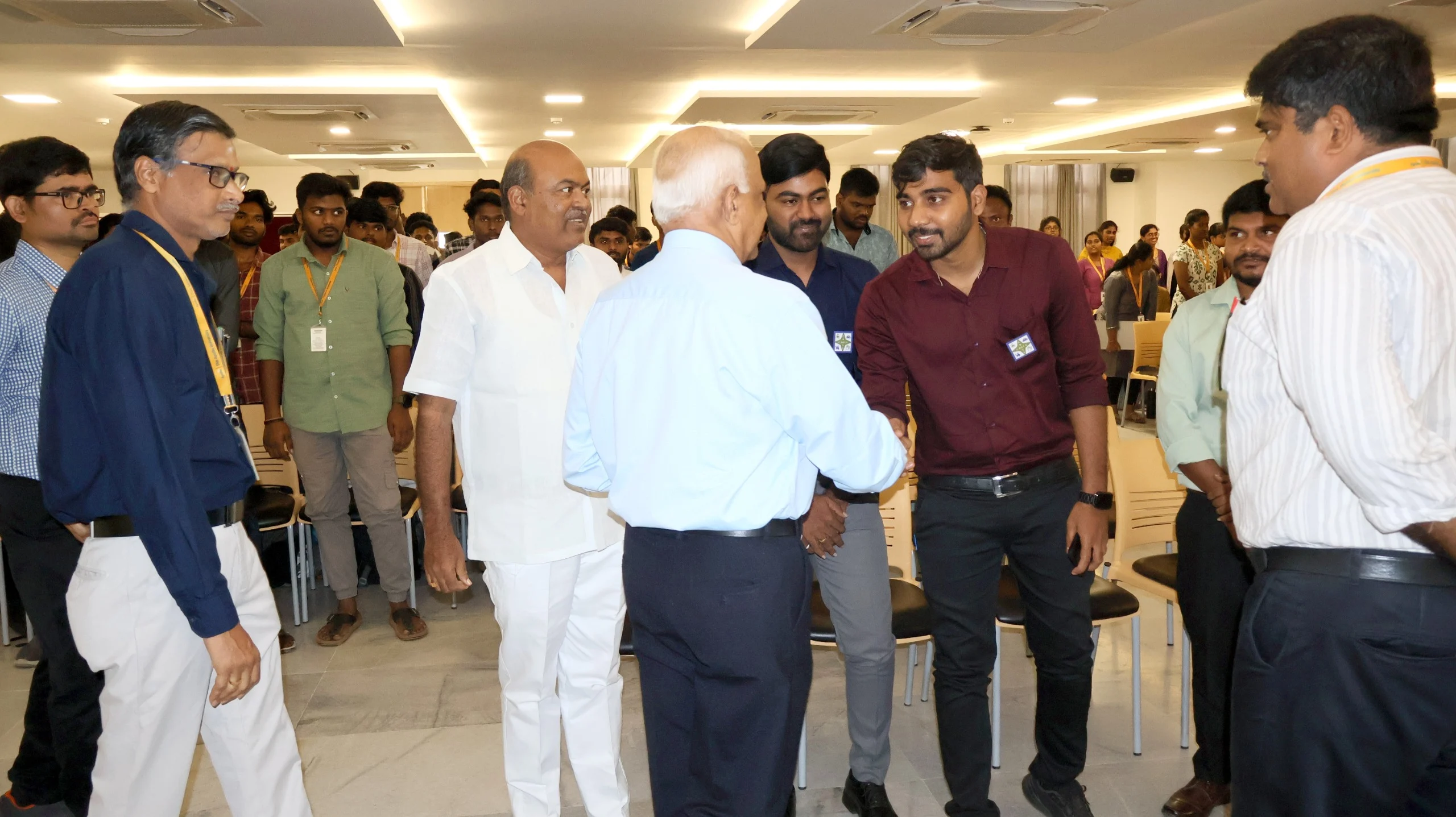
The School of Technology at The Apollo University successfully conducted a two-day training program on Artificial Intelligence and Generative AI (Gen-AI) with ChatGPT, jointly organized in partnership with UNICEF and Skill Route. The program was designed to equip students with future-ready competencies and enhance their employability in the fast-advancing digital world.
The Institution’s Innovation Cell (IIC) played a pivotal role in conceptualizing and facilitating this Gen-AI and ChatGPT Upskilling Programme by creating a structured platform that connects students with emerging technologies and industry-oriented learning experiences. Through IIC’s mandate of nurturing innovation and entrepreneurial thinking, the programme was aligned to encourage students not only to learn AI tools but also to apply them creatively in real-world problem-solving. By integrating innovation-led learning with hands-on training, the IIC helped transform this programme into a meaningful capacity-building and career-enhancing initiative for the students.
The workshop was formally inaugurated by Dr. H. Vinod Bhat, Hon’ble Vice-Chancellor, The Apollo University, who served as the Chief Guest for the program. In his inaugural address, Dr. Bhat emphasized that Artificial Intelligence is not merely a technological tool but a transformative force reshaping every sector—including healthcare, science, business, management, and media. He highlighted the need for students to upgrade their skills to stay relevant and competitive in a rapidly evolving global environment. He emphasized that AI is no longer confined to engineering alone but is increasingly becoming essential in medical sciences, professional domains, and various service sectors.
He noted that training programs like this play a crucial role in preparing students for emerging career opportunities and global competition, encouraging them to embrace AI-driven learning as a core part of their academic and professional growth. He also congratulated the Coding Club students from the School of Technology for their innovative use of AI applications, through which they successfully simplified the admission process for students from Chhattisgarh into the AHS programs by developing an efficient skill assessment system.
The program was held under the leadership of Prof. D. Jagadeesan, Dean, School of Technology, who served as the Convener of the event. He ensured academic orientation, content alignment, and outcome-based delivery throughout the program. The sessions were coordinated by Prof. S. Muralikrishna, Professor, SoT and co-coordinated by Dr. K. Sudheer, Associate Professor who worked closely to facilitate smooth execution across both days.
Six expert trainers from leading industries conducted hands-on sessions covering key concepts. The sessions covered a range of key topics, including the Fundamentals of Artificial Intelligence, Generative AI Models and ChatGPT, Prompt Engineering and Responsible AI Usage, Industrial and Domain-Based AI Applications, and the role of AI in Innovation, Research, and Entrepreneurship. Each session was designed not only to introduce theoretical concepts but also to demonstrate their real-world applications in various professional fields.
The training followed a practical, activity-based approach that encouraged students to experiment with real-time AI workflows. Participants worked on prompts, engaged in guided demonstrations, and collaborated on AI problem-solving tasks. This experiential learning approach enabled students to apply concepts immediately, making the learning process highly effective and enjoyable.
As a result of this initiative, students gained a strong conceptual foundation in AI, a better understanding of current industry practices, and an awareness of global trends shaping emerging technologies. They also developed skills relevant to both employment and research, further boosting their academic and professional preparedness. Upon successful completion of the workshop, participants were awarded certificates from UNICEF, recognizing their skill development in AI and ChatGPT.
The program saw enthusiastic participation, with over 250 students, faculty members, and staff actively involved. The positive feedback received highlighted that the workshop was highly impactful, interactive, and motivating, providing students with an excellent entry point into the world of Artificial Intelligence and its future possibilities.