
COURSE OVERVIEW

The B. Tech in Computer Science and Engineering (AI & Healthcare Technology) at The Apollo University is a future-focused undergraduate program designed at the intersection of Artificial Intelligence and modern healthcare innovation.
Leveraging the rich clinical ecosystem and healthcare excellence associated with the Apollo legacy, this program empowers students to develop intelligent healthcare solutions that transform patient care, diagnostics, and medical decision-making.
Students gain strong foundations in core computer science, artificial intelligence, machine learning, deep learning, data science, and cloud computing, while also learning how these technologies are applied in:
• Medical imaging and diagnostics
• Clinical decision support systems
• Predictive healthcare analytics
• Precision medicine
• Telemedicine and digital health
• Wearable and IoT-based health monitoring systems
The program blends academic rigor, hands-on laboratory experience, clinical exposure, research orientation, and industry collaboration to create healthcare technology leaders of tomorrow.


Programme Objectives
- Provide comprehensive knowledge in algorithms, data structures, operating systems, databases, computer networks, and software engineering.
- Enable students to design and implement machine learning, deep learning, computer vision, NLP, and explainable AI systems.
- Equip students to apply AI techniques in medical imaging, disease prediction, clinical decision support systems, wearable health monitoring, and bioinformatics.
- Encourage research in AI-driven healthcare analytics, precision medicine, and smart medical technologies.
- Train students in data privacy, security, healthcare regulations, and ethical AI deployment in clinical environments.
- Prepare graduates for careers in healthcare IT, AI startups, research labs, hospitals, and global technology organizations.
PROGRAMME HIGHLIGHTS

Programme Curriculum
- Semester - I + -
3 Week Induction Programme Course Code Course Name Periods
per weekCredits Hours per week L T P BTHT1701 Engineering Physics 3 0 0 3 3 BTHT1702 Mathematics Foundation -1 3 1 0 4 4 BTHT1801 Programming Fundamentals 3 1 0 4 4 BTHT1802 Basic Electrical and Electronics Engineering 3 0 0 3 3 TAUT1101 University Core (Communicative English) 3 0 0 3 3 — University Elective I 3 0 0 3 3 BTHL1701 Engineering Physics Lab 0 0 3 1.5 3 BTHL1801 Programming Fundamentals Lab 0 0 3 1.5 3 — IT Work shop 0 0 0 0 1 — Design Thinking 0 0 0 0 1 — Soft Skills 0 0 0 0 1 — Mentoring 0 0 0 0 1 — Technical Seminar 0 0 0 0 1 — Library 0 0 0 0 1 — Physical Activity 0 0 0 0 2 — Extra-curricular activities 0 0 0 0 2 TOTAL 18 2 6 23 36
- Semester - II + -
Course Code Course Name Periods
per weekCredits Hours per week L T P BTHT1703 Mathematics Foundation -2 3 1 0 4 4 BTHT1803 Digital Logic design 3 0 0 3 3 BTHT1301 Data Structures through C++ 3 1 0 4 4 BTHT1804 Problem solving and Programming using Python 3 0 0 3 3 BTHT1302 Software Requirements Engineering 3 0 0 3 3 — University Elective II 3 0 0 3 3 BTHL1802 Digital Logic Design Lab 0 0 2 1 2 BTHL1301 Data Structures through C++ Lab 0 0 2 1 2 BTHL1803 Problem solving and Programming using Python Lab 0 0 2 1 2 — Mentoring 0 0 0 0 1 — Co-curricular activity 0 0 0 0 1 — Self-Learning 0 0 0 0 1 — Physical Activity 0 0 0 0 2 — Extra-curricular activities 0 0 0 0 2 — Library 0 0 0 0 1 — Technical Seminar 0 0 0 0 2 TOTAL 18 2 6 23 36
- Semester - III + -
Course Code Course Name Periods
per weekCredits Hours per week L T P BTHT2501 Computer Organization and Architecture 3 1 0 4 4 BTHT2301 Design and Analysis of Algorithms 3 1 0 4 4 BTHT2302 Object Oriented Programming through Java 3 0 0 3 3 BTHT2801 Automata and Compiler Design 3 1 0 4 4 BTHT2303 Operating Systems 3 1 0 4 4 BTHT2304 Software Engineering and System Design 3 0 0 3 3 BTHL2301 Java Programming Lab 0 0 2 1 2 BTHL2302 Software Engineering and System Design Lab 0 0 2 1 2 — Mentoring 0 0 0 0 1 — Library 0 0 0 0 1 — Physical Activity 0 0 0 0 2 — Extra-curricular activities 0 0 0 0 2 — Technical Paper Writing 0 0 0 0 1 — Technical Seminar 0 0 0 0 1 — Aptitude Training 0 0 0 0 2 TOTAL 18 4 4 24 36
- Semester - IV + -
Course Code Course Name Periods
per weekCredits Hours per week L T P BTHT2305 Human Computer Interaction 3 0 0 3 3 BTHT2901 Software Project Management 3 0 0 3 3 BTHT2502 Foundations of Data Science 3 0 0 3 3 BTHT2306 Database Management Systems 3 1 0 4 4 BTHT2307 Full Stack Web Development 3 1 0 4 4 BTHT2503 Foundations of Artificial Intelligence and Healthcare Technology 3 0 0 3 3 BTHL2308 Full Stack Web Development Lab 0 0 2 1 2 BTHL2303 Database Management Systems Lab 0 0 2 1 2 BTHL2501 Exploratory Data Analytics with R Lab 0 0 2 1 2 — Internship – I will be Evaluated in V Sem – – – – – — Mentoring 0 0 0 0 1 — Aptitude and Logical Reasoning 0 0 0 0 1 — Library 0 0 0 0 1 — Physical Activity 0 0 0 0 2 — Extra-curricular activities 0 0 0 0 2 — Technical Seminar 0 0 0 0 1 — Co-curricular activities 0 0 0 0 2 TOTAL 18 2 6 23 36
- Semester - V + -
Course Code Course Name Periods
per weekCredits Hours per week L T P BTHT3501 Machine Learning and Healthcare Applications 3 0 0 3 3 BTHT3301 Computer Networks 3 0 0 3 3 BTHT3302 Automata and Compiler Design 3 1 0 4 4 — Faculty Elective – I 3 0 0 3 3 — Programme Elective – I 3 0 0 3 3 BTHM3501 MOOC – I 0 0 0 3 3 BTHT3303 Entrepreneurship and Start-up Management 3 0 0 0 3 BTHL3501 Machine Learning and Healthcare Applications Lab 0 0 2 1 2 BTHL3301 Computer Networks Lab 0 0 2 1 2 BTHI3501 Internship – I Evaluation 0 0 4 2 4 — Mentoring 0 0 0 0 1 — Library 0 0 0 0 1 — Physical Activity 0 0 0 0 2 — Extra-curricular activities 0 0 0 0 2 TOTAL 18 1 8 23 36 Faculty Elective – I Program Elective – I Course Code Course Name Course Code Course Name SOTT3401a Object Oriented Analysis and Design BTHT3601a Software Testing Methodologies SOTT3401b Software Engineering BTHT3601b Distributed Computing SOTT3401c Artificial Intelligence BTHT3601c Advanced Java Programming SOTT3401d Computer Organisation and Architecture BTHT3601d Network Security SOTT3401e Linux Programming BTHT3601e Database Security SOTT3401f Advanced Data Structures SOTT3401g Data Warehousing and Mining SOTT3401h Machine Learning SOTT3401i Differential Equations and Vector Calculus SOTT3401j Numerical Methods for Engineers SOTT3401k Mathematical Foundations of Cyber Security SOTT3401l Information Retrieval Systems SOTT3401m Cryptography and Network Security SOTT3401n Principles of Programming Languages SOTT3401o Unix and Shell Programming SOTT3401p Introduction to Psychology SOTT3401q Industry 4.0 SOTT3401r Computer Vision
- Semester - VI + -
Course Code Course Name Periods
per weekCredits Hours per week L T P BTHT3502 Natural Language Processing 3 0 0 3 3 BTHT3503 Medical Image Processing 3 0 0 3 3 — Programme Elective – II 3 0 0 3 3 — Programme Elective – III 3 0 0 3 3 BTHM3502 MOOC – II 0 0 0 3 3 BTHL3502 Natural Language Processing Lab 0 0 2 1 2 BTHL3503 Data Warehousing and Mining Lab 0 0 2 1 2 — Internship – II will be evaluated in VIII-Sem – – – – – — Mentoring 0 0 0 0 1 — Library 0 0 0 0 1 — Physical Activity 0 0 0 0 2 — Extra-curricular activities 0 0 0 0 2 — Valued added courses 0 0 0 0 2 — Seminar 0 0 0 0 1 — Technical Training 0 0 0 0 3 — Self-Learning 0 0 0 0 2 TOTAL 15 0 4 20 36 Program Elective – II Course Code Course Name BTHT3602a Image Processing BTHT3602b Cryptography & Network Security BTHT3602c Deep Learning BTHT3602d Distributed Databases BTHT3602e Explainable Artificial Intelligence Program Elective – III Course Code Course Name BTHT3603a High Performance Computing BTHT3603b Generative AI BTHT3603c MERN Technologies BTHT3603d Network Programming BTHT3603e Software Requirements Management
- Semester - VII + -
Course Code Course Name Periods per week Credits Hours per week L T P BTHT4501 Big Data and Healthcare Analytics 3 0 0 3 3 BTHT4502 Neural Networks and Deep Learning 3 0 0 3 3 — Programme Elective – IV 3 0 0 3 3 — Programme Elective – V 3 0 0 3 3 BTHM4501 MOOC – III 0 0 0 3 3 BTHP4301 Mini Project 0 0 2 1 2 BTHL4501 Big Data and Healthcare Analytics Lab 0 0 2 1 2 BTHL4502 Neural Networks and Deep Learning Lab 0 0 2 1 2 BTHI4501 Internship – II Evaluation 0 0 4 2 4 — Mentoring 0 0 0 0 1 — Library 0 0 0 0 1 — Physical Activity 0 0 0 0 2 — Extra-curricular activities 0 0 0 0 2 — Valued added courses 0 0 0 0 1 — Seminar 0 0 0 0 1 — Technical Training 0 0 0 0 2 — Technical Paper Writing 0 0 0 0 1 TOTAL 12 0 10 20 36 Program Elective – IV Course Code Course Name BTHT4601a Social Network Analysis BTHT4601b AI in Block Chain BTHT4601c Malware Analysis in Data Science BTHT4601d Social Media Analytics BTHT4601e Financial Analytics Program Elective – V Course Code Course Name BTHT4602a Software Project Management BTHT4602b Health Analytics BTHT4602c Business Intelligence and Analytics BTHT4602d Image and Video Analytics BTHT4602e Machine Learning for Security Application
- Semester - VIII + -
Course Code Course Name Periods
per weekCredits Hours per week L T P BTHP4502 Project Work 0 0 24 12 24 TOTAL 0 0 24 12 24
PROGRAMME FEE AND SCHOLARSHIPS
| One-Time Fee | Admission Fee | ₹ 7,000 |
| 1st Year | Tuition Fee + Annual Recurring Fee | ₹ 285,000 + ₹ 13,000 |
| 2nd Year | Tuition Fee + Annual Recurring Fee | ₹ 285,000 + ₹ 13,000 |
| 3rd Year | Tuition Fee + Annual Recurring Fee | ₹ 285,000 + ₹ 13,000 |
| 4th Year | Tuition Fee + Annual Recurring Fee | ₹ 285,000 + ₹ 13,000 |
| Total Programme Fee (4 Years) | ₹ 1,199,000 |
Scholarship is available for eligible students
All the eligible students need to apply for admission and attend counselling conducted by TAU as per the schedule for the university quota.
Eligibility
Candidates must secure 50% in Physics, Chemistry and Mathematics of Intermediate or in the diploma course or must have appeared for Class 12 or equivalent examination with Physics, Chemistry, and Mathematics as major subjects from any recognised board. Candidates who have completed or qualified the final year of a diploma in engineering courses are also eligible. Candidates must not exceed the age of 24 years and the minimum age for applying is 17 years as on 31st December of the Calendar Year.
Lateral Entry
| Total Course Duration | You Will Join In | Seats Available | Education Qualification |
|---|---|---|---|
| 3 Years | 2nd Year | 6 | Students must have completed their three-year engineering diploma in Computer Science program from a recognized institute in order to apply for this program. They also must have secured at least 50% marks in their diploma program. |
EMPLOYABILITY AREAS
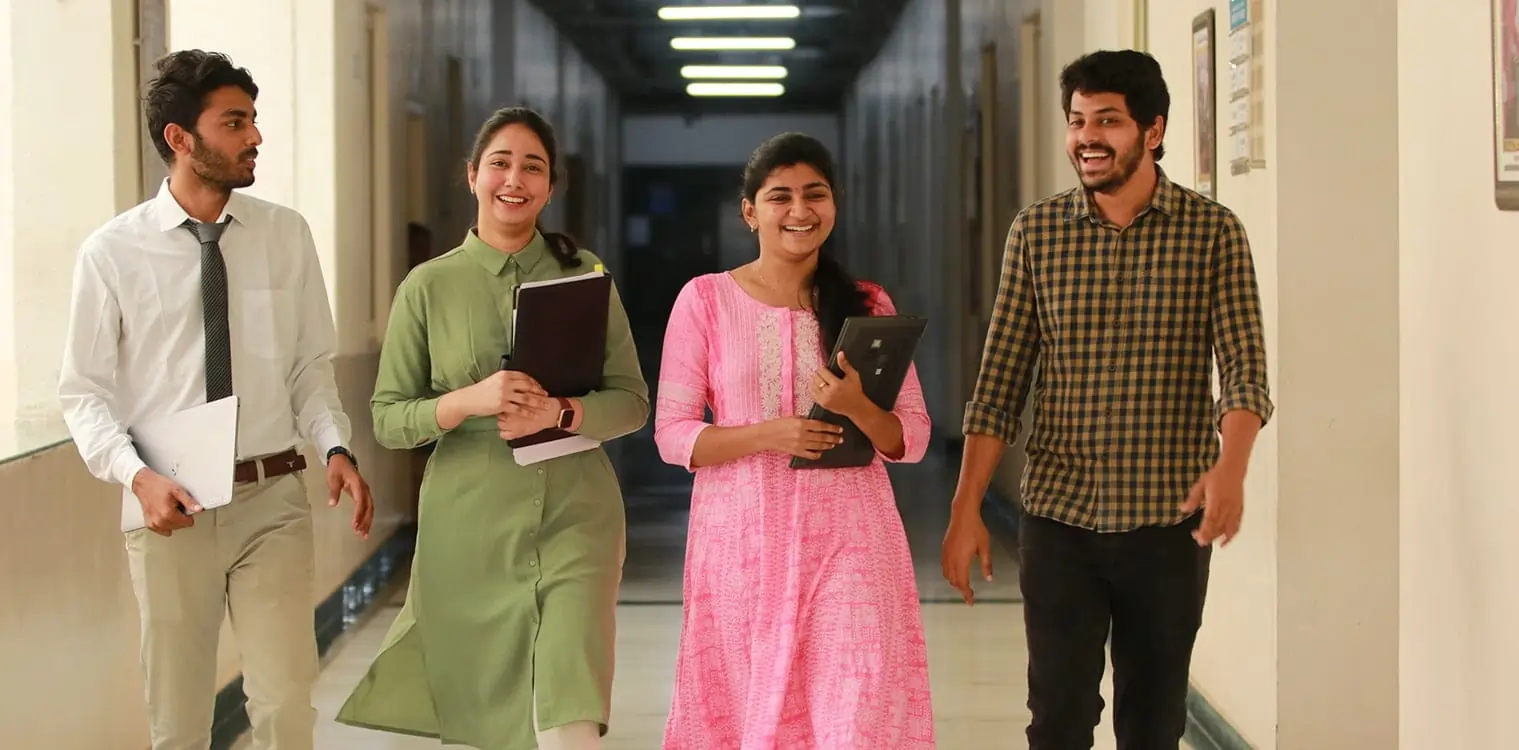
Graduates of this program can pursue careers in:
- AI Engineer (Healthcare Applications)
- Machine Learning Engineer
- Healthcare Data Scientist
- Clinical Data Analyst
- Medical Image Processing Engineer
- Bioinformatics Analyst
- Health Informatics Specialist
- AI Research Associate
- Digital Health Product Developer
- Healthcare Software Developer
- Healthcare IT Consultant
- Regulatory and AI Ethics Analyst
FAQs
-
Which is better: B.Tech CSE or B.Tech AI and ML?
+ -Both degrees offer strong foundations in computer science. B.Tech in AI & ML provides specialised skills in intelligent systems and is ideal if you’re passionate about robotics, NLP and deep learning. In contrast, CSE offers broader career flexibility across software development, systems and infrastructure.
-
Is a B.Tech in AI and ML good for the future?
+ -Yes. AI/ML is expected to add $15.7 trillion to the global economy by 2030, with enormous demand in healthcare, finance and more. Salary prospects start at ₹6–15 LPA and can reach ₹25–50 LPA as experience grows.
-
Which is better: CSE or AI and ML?
+ -If you enjoy a versatile approach and wide industry options, CSE is ideal. If you’re certain about specialising in intelligent technologies, like neural networks, robotics, or NLP, then AI & ML is a better fit. Both are future-focused; the choice depends on your passion.
-
What are the eligibility criteria for admission into B.Tech (CSE – AI and ML)?
+ -Applicants must have:
- Passed 10+2 from a recognised board with ≥50% marks
- Studied Physics and Mathematics (compulsory)
- Admission is via an entrance exam or merit-based selection
-
What career opportunities are available after completing B.Tech AI and ML?
+ -Graduates can pursue roles such as:
- Machine Learning Engineer
- Data Scientist
- AI Research Scientist
- Computer Vision or NLP Engineer
- MLOps Engineer
- AI Product Manager
-
What are the key topics covered in B.Tech (CSE – AI and ML)?
+ -Core study areas include:
- Programming Fundamentals (Python, C/C++)
- Data Structures & Algorithms
- Probability & Statistics
- Machine Learning, Deep Learning, NLP, Computer Vision
- AI ethics, robotics, reinforcement learning
-
What is the cost of the AI and ML course?
+ -At The Apollo University, the total fee for B.Tech CSE, AI & ML is ₹10,59,000 (₹2.63 lakhs per year including ₹13,000 admission fee). Other private universities may range ₹6–10 LPA/year, while public colleges can cost ₹2–5 LPA/year .
-
What qualification is required for the B.Tech AI and ML course?
+ -Candidates must have completed 10+2 with Physics and Mathematics and preferably Chemistry/Computer Science, securing at least 50% aggregate. Entrance exams or merit-based applications are used for admission.
-
Is there any scholarship available for the B.Tech AI and ML course?
+ -The Apollo University offers merit-based scholarships and financial aid, including scholarships for high achievers and economically disadvantaged students. Additionally, some state- or national-level scholarships might apply .
-
What is the subject of AI and ML?
+ -Key subjects include:
- Introduction to AI & ML
- Deep Learning / Neural Networks
- NLP & Speech Processing
- Computer Vision
- Reinforcement Learning, Robotics
- Ethics in AI, Data Analysis & Statistical Inference